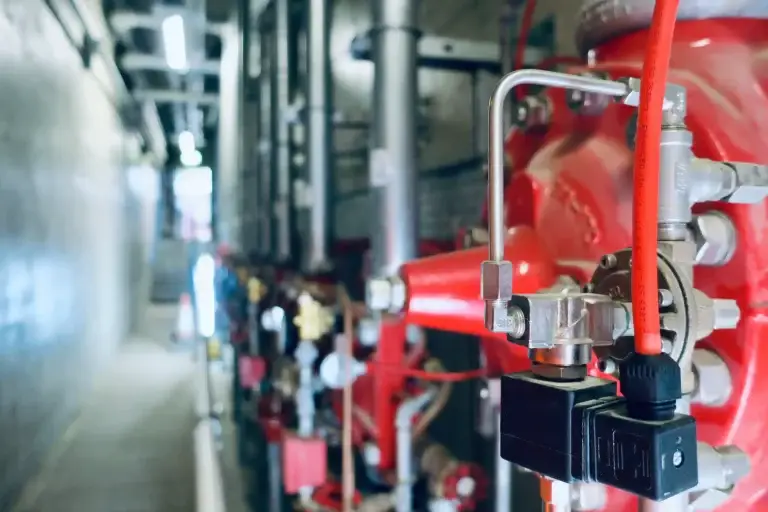
When architectural projects push the boundaries of scale and industrial factories house massive fuel loads, generic prescriptive codes are often not enough to handle fire risks. True structural safety
demands a science-driven approach called Fire Safety Engineering.
This discipline relies on rigorous mathematical modeling, thermodynamic calculations, and advanced software simulations to predict how fire and toxic smoke will behave. By designing your
infrastructure with these advanced metrics, you create a space optimized to actively suppress threats and give occupants a safe route out during emergencies.
The Scientific Pillars of Fire Design & Calculation
Our engineering teams develop advanced fire safety blueprints based on three core areas of scientific analysis:
- Hydraulic Flow Calculations: Simulating pressure drops across thousands of feet of
complex piping networks to ensure water drops with the exact flow rate needed to suppress a fire at the furthest point.
- Computational Fluid Dynamics (CFD) Smoke Modeling: Using specialized computer models to map out exactly how heat, toxic gasses, and dark smoke move through complex warehouse corridors and high-rise building stairwells.
- Structural Thermal Integrity: Calculating how building elements react to extreme heat curves to ensure structural columns are adequately insulated with fire-retardant barriers, preventing early building collapses.
1. Structural Elements of Advanced Fire Engineering Design
A. Active Suppression System Design
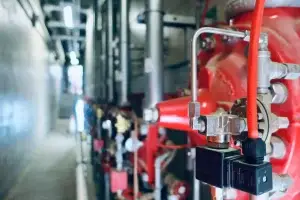
Drafting precise layouts for automatic pre-action sprinkler systems, deluge systems for chemical plants, and clean-agent gas flooding setups for high-voltage transformer rooms.
B. Mechanical Smoke Extraction Profiles
Designing high-capacity smoke spill fans, axial roof extractors, and automated makeup air louvers that clear toxic smoke from evacuation pathways, keeping visibility high for emergency teams.
C. Passive Compartmentation Matrices
Using fire-rated masonry, fire dampers inside ventilation ductwork, and intumescent slab sealants to divide large floors into secure containment cells. This layout confines fire to its point of origin for up to 2 to 4 hours.
Engineering Focus: Simulating Smoke Behavior with Fire Dynamics (FDS) Toxic smoke inhalation causes far more casualties in structural fires than actual heat or flames. At Loop
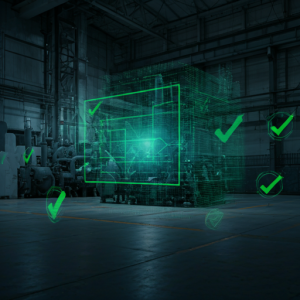
Engineering, we use advanced Fire Dynamics Simulators to build detailed 3D models of your facility. We simulate worst-case fire scenarios to calculate the exact timing of smoke accumulation, letting us position extraction fans precisely where they can clear exit pathways fast.
2. Measurable Operational and Business ROI
| FIRE ENGINEERING IMPACT METRIC | |
| 100% Elimination of Pipe Sizing Errors via Hydraulic Verification | Optimized Equipment Budgets via Exact Capacity Modeling Profiles |
- Optimized Equipment Spending: Precision software modeling eliminates guessing, preventing you from over-purchasing oversized piping networks or redundant pump capacities while keeping your system fully compliant.
- Flawless Building Code Approvals: Supplying stamped, highly detailed calculation sheets speeds up building plan reviews with local regulators and international safety boards.
- Minimized Operational Risks: Engineered passive barriers isolate potential fire zones
completely, keeping nearby manufacturing spaces safe and preventing full facility shutdowns.
3. The Loop Engineering Advantage
Loop Engineering Ltd. delivers world-class fire safety engineering and specialized drawing verification services:
- Hydraulic Modeling with Industry-Standard Software: Generating verified pipe-network calculations that guarantee dependable water pressure levels.
- Smoke Control & Vent Layout Design: Creating smart mechanical extraction designs that maintain clean, breathable air pathways along exit corridors.
- Cross-Discipline Coordination Reviews: Using building information modeling (BIM) to coordinate fire system paths with structural frames and HVAC ducts, preventing installation delays.
Science-Backed Protection for Your Investments
Fire safety engineering moves your facility safety strategy from basic guesswork to proven, reliable performance. Investing in detailed fluid dynamics and thermal design protects your structural assets, minimizes unexpected risks, and keeps your workforce secure.
Planning a high-rise structure or upgrading your factory’s fire containment designs? Contact our Fire Safety Engineering Directors to schedule a technical design consultation.