The global industrial landscape is undergoing a massive paradigm shift. Traditional manufacturing facilities, once reliant on isolated machinery and manual data collection, are rapidly transitioning into hyper-connected ecosystems. This evolution is driven by two powerful forces: Industrial Automation and the Industrial Internet of Things (IIoT).
For forward-thinking enterprises, implementing these technologies is no longer a luxury—it is an absolute operational necessity to stay competitive, reduce overhead costs, and eliminate human error.
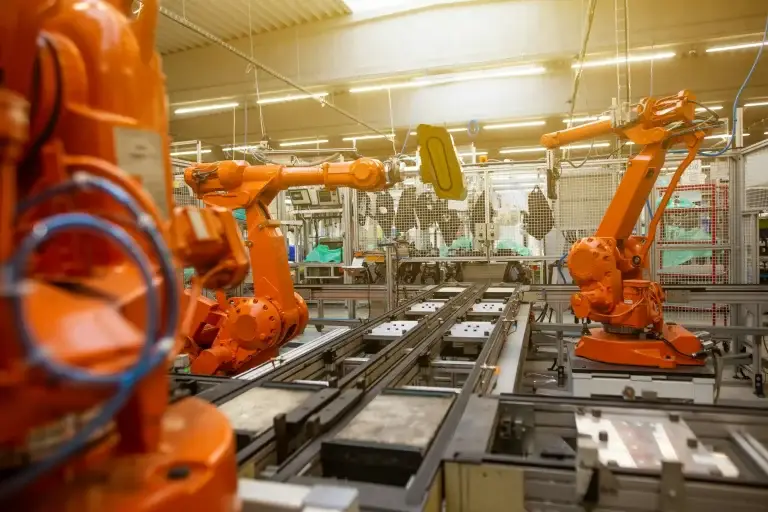
Industrial Automation: This refers to the use of control systems, such as computers, PLCs (Programmable Logic Controllers), and robotics, to handle different processes and machinery without human intervention. It focuses on executing commands, driving speed, and ensuring repetitive precision.
Industrial IoT (IIoT): IIoT introduces a layer of intelligence. By embedding smart sensors, network connectivity, and data analytics software into physical machinery, machines can now “talk” to one another, collect operational data, and stream it to a centralized cloud platform.
The Core Architecture of a Smart Factory
Implementing an automated, IoT-driven system requires a structured, multi-tiered architecture to ensure seamless communication from the factory floor to the boardroom. A world-class deployment features four essential pillars:
A. The Sensor and Edge Layer
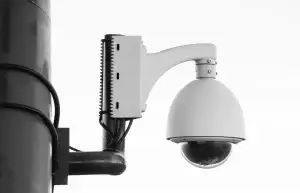
Every smart machine relies on data collection. This layer consists of specialized hardware—such as vibration sensors, thermal cameras, pressure transducers, and flow meters—installed directly onto critical machinery. These devices monitor physical metrics continuously.
B. The Control and PLC Layer
The data collected must be acted upon instantly. Industrial control panels equipped with high-performance PLCs process these inputs in milliseconds, triggering immediate mechanical adjustments to keep systems running safely within target parameters.
C. The Communication Framework
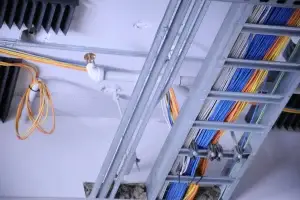
Unifying a facility requires strong networking protocols. Using industrial communication standards like Modbus, Profibus, Ethernet/IP, and MQTT ensures that edge devices safely transmit operational metrics without losing data to electromagnetic interference.
D. The Enterprise & SCADA Layer
At the top level, Supervisory Control and Data Acquisition (SCADA) systems and cloud analytics platforms transform raw numbers into intuitive, visual dashboards. This gives plant managers and engineering directors real-time visibility into overall factory health from any web browser or mobile app.
Technical Focus: Why Connectivity Protocols Matter In complex engineering environments, data silos are the biggest bottleneck to efficiency. By bridging legacy hardware with modern MQTT and OPC-UA communication channels, industrial facilities can extract data from machines built decades ago and pipe it directly into modern cloud optimization software.
Top Benefits of Integrating Automation and IoT
KEY BENEFITS METRIC
| Up to 30% Reduction in Maintenance Costs via Predictive Monitoring | Up to 20% Increase in Overall Equipment Effectiveness (OEE) |
Implementing a unified automation and IIoT framework delivers immediate, measurable returns across several major KPIs:
- Predictive Maintenance Over Reactive Repairs: Traditional maintenance happens on a fixed schedule or after a catastrophic failure occurs. With IIoT sensors constantly tracking variables like machine vibration and heat signatures, analytics software predicts component degradation weeks before a malfunction happens, preventing costly unplanned downtime.
- Optimized Resource Consumption: Energy costs are a significant operational line-item. IoT tracking monitors power spikes and energy wastage across specific assembly lines, giving management the exact insight needed to implement peak-shaving strategies and lower utility bills.
- Uncompromising Operational Safety: Automation takes personnel out of hazardous zones. Environmental IoT sensors continuously track air quality, chemical levels, and ambient temperatures, automatically shutting down lines and alerting teams if conditions breach safe thresholds.
Loop Engineering’s Strategic Approach
At Loop Engineering Ltd., we design, source, and install tailored Industrial Automation & IoT solutions across Bangladesh’s fast-growing industrial sectors. Our approach focuses on seamless integration:
- Comprehensive Site Audit: We analyse your existing physical infrastructure, identifying production bottlenecks and machinery ready for digitalization.
- Custom Panel & System Design: Our engineering teams design tailored control systems, specifying exact PLC architectures and sensor maps fitted for your specific operational goals.
- Deployment & Optimization: We manage everything from field-level wiring to SCADA programming and network security integration, ensuring your transition to an automated ecosystem is smooth and highly secure.
Take the First Step Toward Industry 4.0
The future of manufacturing belongs to connected, data-driven enterprises. By upgrading your facilities with robust automation mechanisms and real-time IoT tracking, you protect your infrastructure against unpredictable operational costs and maximize daily output.
Ready to transform your factory into a smart, efficient ecosystem? Contact Loop Engineering’s Technical Directors Today for a Comprehensive Consultation.